
‘I just fell in love with these characters’: Matthew Bourne on The Midnight Bell ahead of Nottingham date
As his new show The Midnight Bell heads out on tour, renowned choreographer Matthew Bourne talks about what audiences can expect when the production comes to Nottingham.
In 1930s London, ordinary people emerge from cheap boarding houses nightly to pour out their passions, hopes and dreams in the pubs and fog-bound streets of Soho and Fitzrovia. The Midnight Bell is a tavern where one particular lonely-hearts club gather to play out their lovelorn affairs - bitter comedies of longing, frustration, betrayal and redemption.
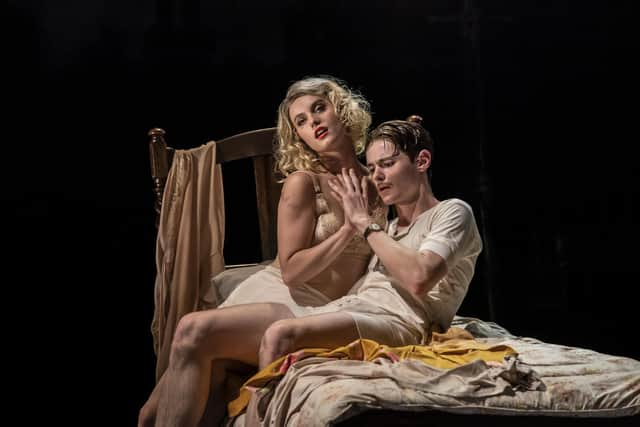

Hailed by The Observer as "the undisputed king of dance theatre,” Bourne has produced some of the most successful dance theatre productions of the last 30 years including Swan Lake, Cinderella, The Red Shoes and Edward Scissorhands.
And ahead of the show, inspired by the novelist Patrick Hamilton, Bourne spoke about the appeal of stories of working-class life – and what his new work can tell us about the past and present.

When did you first become aware of the work of Patrick Hamilton?
Patrick Hamilton’s most famous works, and the ones that kept him financially secure throughout his life, were actually two very successful plays, Rope (1929) and Gaslight (1938). It was through the film versions of these plays that I first became aware of Hamilton as a writer. In fact I toyed with the idea of staging Rope, as a play, some years ago, having seen the famous Hitchcock movie. The novels came later for me and they represent a very different world to the plays. I think Hamilton was consciously trying to write something with popular appeal for his theatre work and he succeeded in creating two of the most commercially successful melodramas of their day. However, the novels tell a different story borne out of mostly bitter personal experience and failed relationships. Painfully honest, but also beautifully observed and even finding humour in these mesmerising tales of lonely lives looking for love.
What aspects of his novels appealed to you as a storyteller?
I think initially I just fell in love with these characters and the truthful way that Hamilton gets to the heart of them. Hamilton’s world could be seen as the flip-side of his close contemporary, Noël Coward, whose witty and glamorous world of cocktails and high society was the epitome 1930s fashion and imagery. Hamilton, on the other hand, wrote about the working man (and woman), borne out of years of observation and social interaction at his favourite location – the rather unglamorous London Pub. The characters are therefore very relatable, and their “voices” ring true. For many years I have held the belief that dance can tackle, in-depth, unconventional and complex relationships rather than the standard boy/girl romances that dance often favours and these characters and stories require us to “dig deep” and find a non-verbal language to do them justice. You can learn so much about 1930’s attitudes to sex and relationships through Hamilton’s novels and I must admit that much of it was revelatory and unexpected. Hamilton has been called “a connoisseur of alcoholic behaviour” and this aspect appeals greatly to me as a non-verbal storyteller as it suggests “altered states” and even “gin-soaked” fantasies that are particularly useful when exploring the inner life of a character.
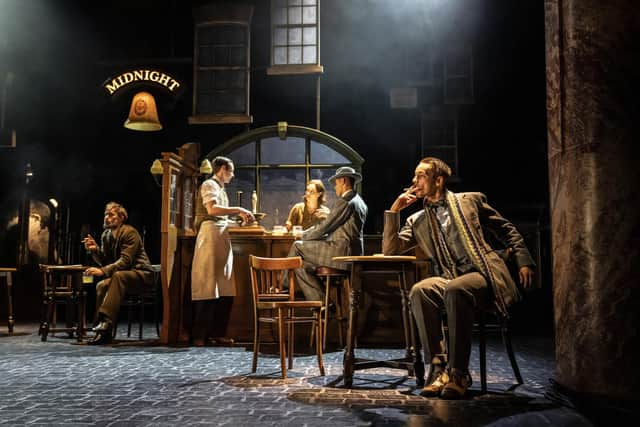
The Midnight Bell is the name of one of Hamilton’s early novels that went to make up the trilogy entitled Twenty Thousand Streets Under The Sky. However, rather than a straightforward adaptation, this is a devised piece inspired by the world in which Hamilton’s various novels take place. How did you go about this?
I made a devised piece in 2001 called Play Without Words which looked at various British movie classics of the 1960’s such as The Servant and Look Back In Anger amongst many others. From this I created a kind of “mash-up” of stories and characters from different movies that dealt with changing attitudes to class and culture of that time. I think that I was looking for another fascinating era to apply this very free approach to when I hit on the idea of exploring the very particular world of Patrick Hamilton in the 1930s. We weave six interconnecting stories or relationships throughout the piece, without telling the full story of each novel, but rather creating a kind of “essence” of Hamilton’s world. The only thing that they all do have in common is that they are all regulars or employees of The Midnight Bell pub that gives our show its title. Much of Hamilton’s work was deeply personal and became the source from which he created his finest and most individual work, so it was with some trepidation that I have taken the liberty to include a touching gay story amongst our Soho tales. The homosexual “underworld” was not as hidden as you might expect at this time, despite regular police raids of known gay haunts. There is much evidence that gay pick ups and cruising, through a complex series of coded signs and signals, would be a regular occurrence at the very pubs that Hamilton regularly frequented in Fitzrovia. Indeed, I also unearthed some research in letters that Hamilton wrote in later life that suggested a very liberal and, for the time, uncharacteristically open attitude towards homosexuality.
Can you tell us something about your collaboration with Terry Davies on the original musical score for this new work?
The first thing that I said to Terry was that I didn’t want a 1930’s “pastiche” score. I wanted a contemporary score that reflected the emotion and inner life of the characters, the themes of loneliness, furtive relationships, erotic obsession, drunken oblivion and bittersweet longing. Terry also loved the Hamilton books and our work together has been driven by a desire to be true to the “atmosphere” of the novels and characters; We have though added the odd period “surprise” in our score that reflects the words and music that our characters may have been listening to at that time.
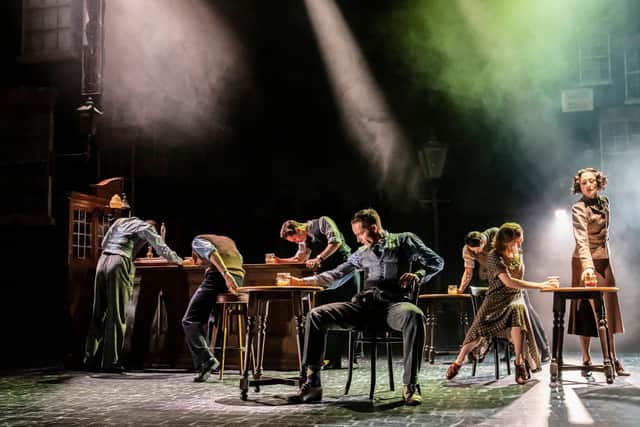
These novels were written primarily in the first half of the last century and you have set your piece in the early 1930s. What does The Midnight Bell have to say to the audiences of today?
One of the reasons that many of our productions can be revived again and again is that they deal in universal and timeless truths. Of course, there is a place for work that directly addresses very contemporary concerns and issues but this work does inevitably date much more quickly. I prefer to make work that finds its relevance through the making of the piece and the people who make it; work that can resonate in a different way many years after its premiere. Its why our Swan Lake is always relevant with its story of a young man looking for love; that story never dates. It’s why our Romeo and Juliet will always be relatable to an audience who remember what it was like to fall in love for the first time.
The Midnight Bell runs at the Theatre Royal from Tuesday September 2 to Saturday 6 September. Visit trch.co.uk or call 0115 989 5555 to book.