
Did a 'witch' once live in the caves of Creswell Crags?
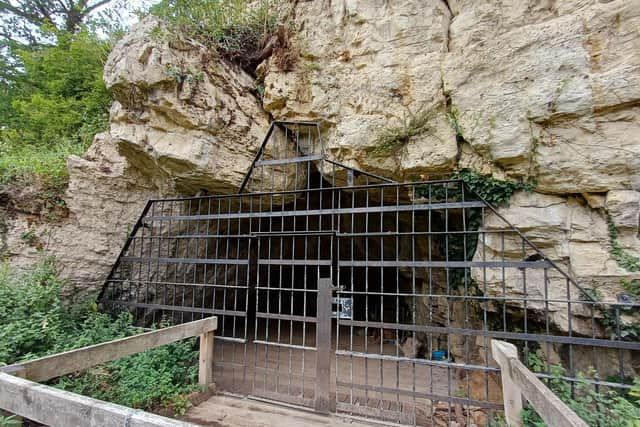
Local folklore tells of a woman accused of witchcraft who lived in a cave at Creswell Crags, known as Mother Grundy’s Parlour.
In the 18th century, it is believed that a woman (thought to have been a witch) lived in a cave at Creswell Crags, located on the Nottinghamshire and Derbyshire border.
This woman, only ever referred to as Mother Grundy, was allegedly an elderly resident of the village of Creswell.
Accused of witchcraft and driven out by locals, she allegedly found refuge in the caves of Creswell Crags, with some believing that her presence can still be felt today.

Where there’s a witch, there’s a way
According to folklore, what began as a witch hunt, ostracising the woman from her village, soon turned into a tale of heroism.
When the child of a wealthy local landowner fell ill – possibly due to eating a poisonous plant – it was Mother Grundy who knew the cure and was able to heal him.
This act earned the elderly woman the gratitude of the villagers, who welcomed her back with open arms.
However, wounded by their cruelty and connected to the wild ways, the woman declined their offer, choosing instead to find greater happiness living in the caves.
Witch marks
The limestone gorge caves, estimated to be tens of thousands of years old, were believed to be portals to hell by some nearby residents.
A significant collection of protective symbols, commonly known as 'witch marks' or apotropaic marks, has been discovered in caves in recent years.
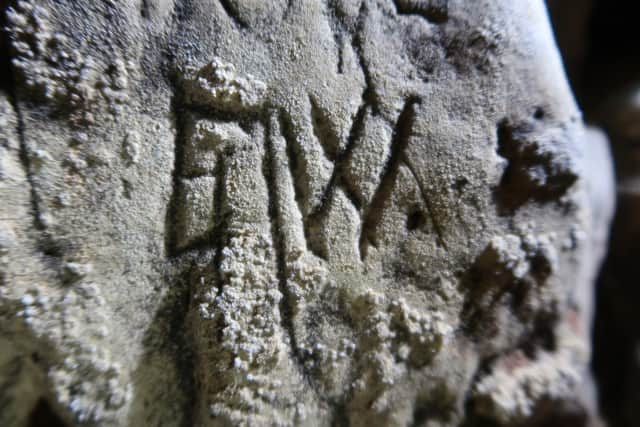
The majority of witch marks at Creswell Crags are located in the largest cave, Robin Hood Cave.
Hundreds of these marks surround the entrances to tunnels that extend deep into the rock within this cave.
Visitors can explore Robin Hood Cave during their Witch Marks Cave Tour.
The tour also passes by Mother Grundy’s Parlour, although it does not go inside. During the tour, Mother Grundy is mentioned.
These markings are believed to have been inscribed to ward off evil spirits, making this discovery the largest of its kind in the UK.
The marks, consisting of various symbols and etchings, are thought to have been created in previous centuries by locals who feared what might emerge from the deep, dark openings in the cave.
Mother Grundy's Parlour
Although Mother Grundy's story cannot be verified by staff, these are certainly the tales that have been told over the years.
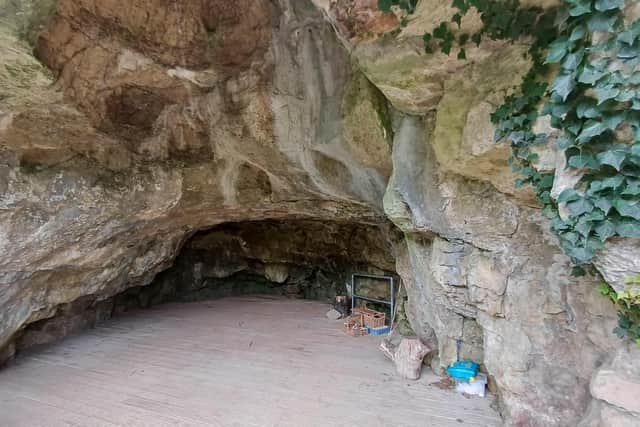
Mother Grundy’s Parlour is a small cave. Most visitors cannot enter the cave, as it is reserved for school visits and special events.
However, the main chamber is visible from the entrance, which is accessible to the public via a series of wooden steps.
Mother Grundy’s Parlour has been the focus of several intriguing historical discoveries, according to Creswell Crags’ website.
For example, in the mid-19th century, a woman from Creswell village had a dream about treasure hidden in Mother Grundy’s Parlour.
Her husband, convinced by her vision, conducted an excavation of the cave.
The details of this excavation are not well-documented, but it is believed that a hippopotamus tooth was discovered and sold shortly afterward – a sort of treasure.
Since that initial dig, at least six teams of archaeologists have excavated both inside the cave and in the scree deposits and spoil outside.
One fascinating find is a collection of fractured horse teeth, which suggests that Ice Age hunter-gatherers were once butchering horses at this location.
Find out more at www.creswell-crags.org.uk/explore/the-caves.