
More than 1,000 empty council homes across Nottinghamshire ‘symptoms of much bigger malaise’
There are more than 1,000 empty council homes across Nottinghamshire, new figures have revealed.
One local government expert says the country has a ‘long-term problem’ with empty homes, and is the symptom of a much bigger malaise.
The shortage of council homes – and affordable housing in general – is a significant problem that has been plastered across local and national headlines for years.
Waiting lists have been soaring, and a weighty portion of the reasoning for this is Margaret Thatcher’s Right to Buy policy, under which millions of houses have been sold at discounted rates to their tenants.
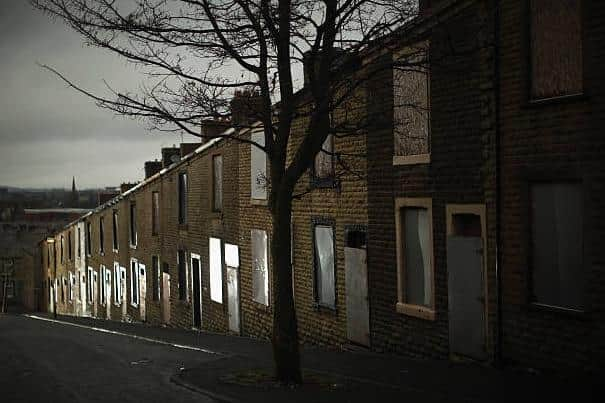

The problem is that nowhere near enough council homes were built to replace them.
Seemingly endless waiting lists and rising homelessness have been a consequence of this, and now new figures obtained by the Local Democracy Reporting Service (LDRS) show there are around 1,049 council homes across the city and county left empty and waiting for renovation.
Peter Murphy, professor of public policy and management and head of research at Nottingham Business School at Nottingham Trent University, says there have been multiple initiatives to try and help councils bring empty homes back into the market over the last two decades.
Two of the most recent and significant schemes included the Empty Homes programme from 2012, and the Affordable Homes programme from 2015 to 2018.
However he says none have been resoundingly successful.
He said: “You’ve had the empty homes programme between 2012 and 2015 when the coalition Government was in power, and you had the cluster of empty homes programmes that followed it.
“You had the new homes bonus which was again an incentive for bringing empty homes back into use, but the overall trend is of increasing empty homes, and especially long-term empties and they’ve been rising for several consecutive years.
“England now has more long-term empty homes since the war years.
"We are going through a period where we haven’t had any housing initiatives that have really worked.”
Prof Murphy said gone are the days of housing improvement grants, which began to decline from John Major’s premiership in the 1990s, and the significant council home building years following the Second World War.
He continued: “It used to be you treated housing as a social problem, but at some point in the 70s we started treating housing as an economic problem.
"Empty homes, homelessness, and soaring rents are the symptoms of a much bigger malaise.
“Since it has been treated as an economic problem we’ve had a shortage of all types.
"We’ve never had enough housing stock to keep pace with the population.”
The Labour Government currently has plans to boost housebuilding, with aims to build 1.5m new homes by the end of the current Parliament.
The LDRS asked all councils that own and manage their own housing stock how many empty homes they currently have.
Councils such as Gedling and Rushcliffe do not own or manage their own housing stock.
Nottingham City
Figures show Nottingham City Council currently has the most void (empty) properties, but has been making considerable ground in bringing many back into circulation.
The figures have fallen ever since Nottingham’s housing stock has been brought back under the full control of the Labour-led council.
Nottingham City Homes (NCH), the arms-length management firm that managed them previously, was disbanded after it was discovered millions of pounds in rent payers’ money had been incorrectly – and some unlawfully – transferred to the council’s general fund.
There are currently around 11,000 people on the authority’s housing waiting list.
The council told the LDRS that as of February 2026 it had 362 empty properties at various stages of works.
This number is down from 739 in August 2025.
Prof Murphy said the figure pointed to the council bucking a national trend of rising empty homes.
A city council spokesperson said: “Works to these properties can include anything from changing the locks to installing a new kitchen or bathroom, plus any necessary gas and electrical safety checks.
“Once all the works are completed and a property is safe, it is handed over to the lettings team so it can be offered to someone on the housing waiting list.
“We currently have 204 homes in the lettings process, with offers being made and lets being negotiated to people in housing need in Nottingham.
Mansfield
Figures show Mansfield has the second-highest number of empty council homes in the countywith 268 as of January 21 this year.
Mansfield Council figures published last year revealed there were 369 more applications in the 12 months to March 2025, bringing the total applications for housing to 4,728, up from 4,359 in March 2024.
Families were said to have been waiting up to a year for homes – an average of 282 days.
The council says its target rent loss due to empty properties is 1.75 per cent, but as of quarter three in the current financial year of 2025-26, it has been losing 3.75 percent of rental income.
Furthermore, it has a target for all re-lets to go back on the market in 80 days, but the re-lets time was 185 days in the same quarter.
Council documents say: “The increase in the number of voids, and a longer turnaround time, was due to a historical compliance-driven decision to remove all asbestos from properties when they become void, an increased voids specification and contractor capacity.”
Broxtowe: ‘We are actively working to minimise the number of empty properties’.
Broxtowe
Broxtowe Alliance-led Broxtowe Council says it has 55 void properties.
The council owns its own housing stock and currently manages around 4,400 properties, and there were around 1,300 active applications on its housing waiting list as of last year.
A spokesperson said: “We are actively working to minimise the number of empty properties at any time.
“We have a proactive approach to property turnaround time and a key aim within the teams is to ensure that properties do not stand empty longer than necessary.
“Our teams are focused on minimising waiting times and ensuring properties are ready for occupation as soon as possible.”
Over the current financial year to date the council says it has let 265 homes, helping individuals and families to access quality affordable accommodation throughout the borough.
The spokesperson added: “We remain committed to maximising our housing stock, reducing our void periods and delivering quality homes for all our applicants.”
Bassetlaw
Bassetlaw Council says it deals with voids in line with its process, and responded to the LDRS to say it currently has 120 empty council properties.
Ashfield
Ashfield Council says it has around 40 to 50 vacant council homes at any one time.
A spokesperson said: “The properties will either be with our repairs team to complete works to bring the property up to a lettable standard, or with our lettings team to be allocated to an applicant on the housing register.
“We have tight targets for turning around and letting our vacant properties.
“We do not have any difficult to let properties or homes in disrepair that we are unable to let.”
Newark & Sherwood
Newark & Sherwood Council has around 194 empty council properties.
Coun Lee Brazier (Lab), the council’s portfolio holder for housing, said he ‘recognises’ improvements need to be made to the authority’s housing function, including bringing back into use the empty properties.
He said a ‘four-year investment programme totalling £83m’ will see ‘improvements to kitchens, bathrooms and heating’ during a meeting on February 10, where the housing revenue account was discussed.