
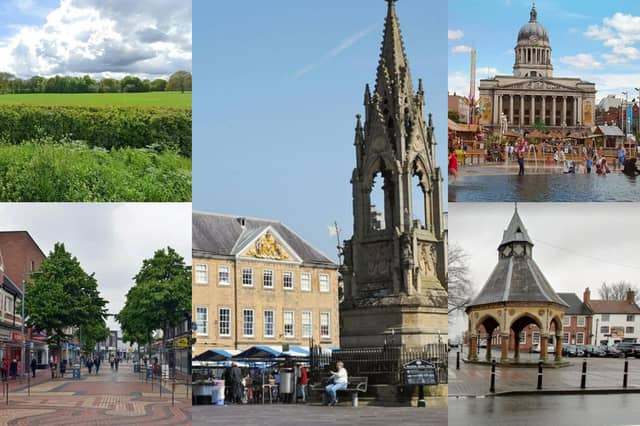

When it comes to British place names, Anglo-Saxon origins tend to dominate in the south and Scandinavian languages in the North, mixed in with Old British or Celtic terms for natural features such as hills and rivers.
Nottinghamshire still shows the influence of all three factors in the names we find today.
Often towns and villages share common endings such as -tun (settlement), -ham (homestead), -feld (farmland), -by (village), -caester (Roman stronghold), -worthig (enclosure), -dun (hill), -halh (nook of land) – but these usually follow a first element which is much harder to define, especially when a personal name is concerned.
The famous Domesday Book – a land survey commissioned by William the Conqueror and completed in 1086 – shows Nottinghamshire names which have been modernised, but otherwise changed very little in all that time.
To understand where they came from, we went looking in the Oxford Dictionary of British Place Names.
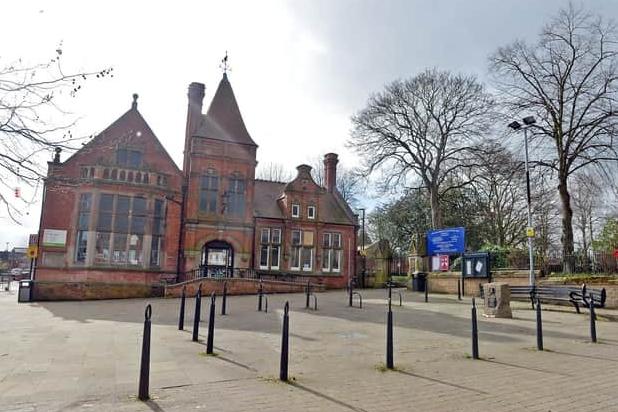
5. Hucknall
This Ashfield town got its name from the Old English name Ucca, which is a pet form of the Old English personal name Uhtræd. From 1295 until 1915, the town was known as Hucknall Torkard, taken from Torcard, the name of a dominant landowning family. Signs of the earlier name can be seen on some older buildings. Photo: Hucknall Dispatch
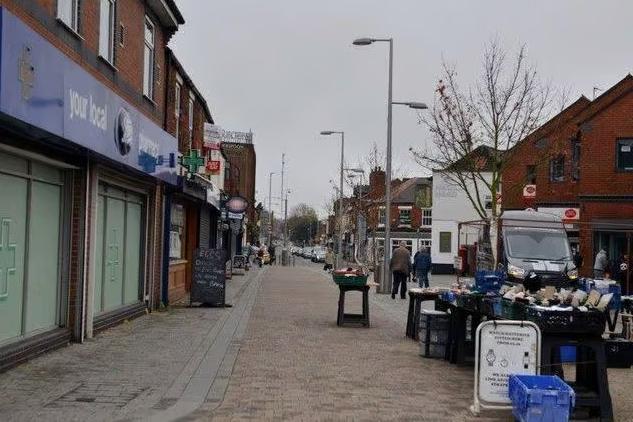
6. Kirkby-in-Ashfield
The town's name betrays a Danish origin: Kirk by is Old Danish or Old Norse for "Church Town". Photo: Mansfield Chad
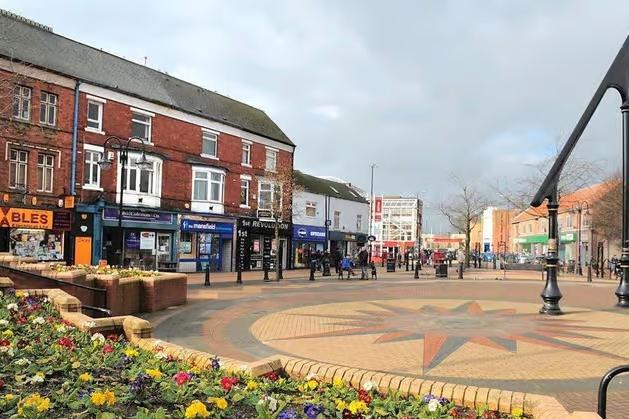
7. Sutton-in-Ashfield
Its Anglo Saxon place name of 'Sutton' (meaning 'south estate') as recorded in the Domesday Book was extended at a later date to include 'in Ashfield' (meaning 'in the open land where the ash trees grow') to distinguish it from other places named Sutton. Photo: Mansfield Chad
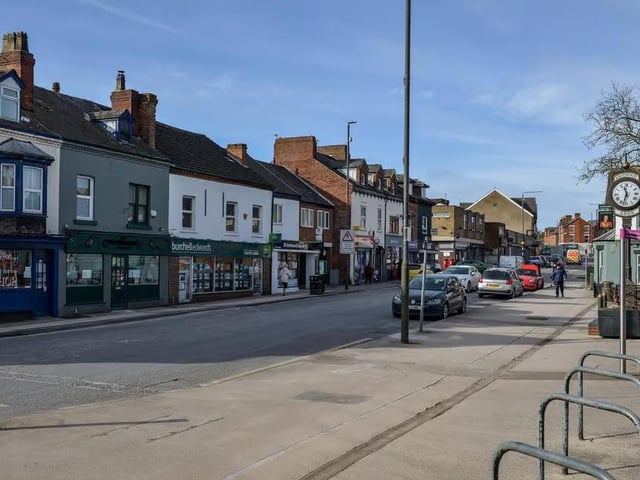
8. Eastwood
"Eastwood" is a hybrid place-name, formed from Old English Est, for "East", and Old Norse Þveit /ˈθweɪt/, for "meadow", "cleared meadow", or "clearing in a wood." Photo: Eastwood Advertiser