
Inquest jury concludes gross negligence manslaughter in death of former Bassetlaw Hospital mental health patient
A ‘caring and kind’ teenage patient in a mental health hospital was unlawfully killed by a healthcare worker who falsified records.
Louise Furlong, aged 19 – who was a resident at Heathcotes Moorgreen Care Home in Hucknall when she wasn’t in hospital – at died on September 12, 2022, after being found unresponsive in her bathroom at Highbury Hospital in Highbury Vale the evening before.
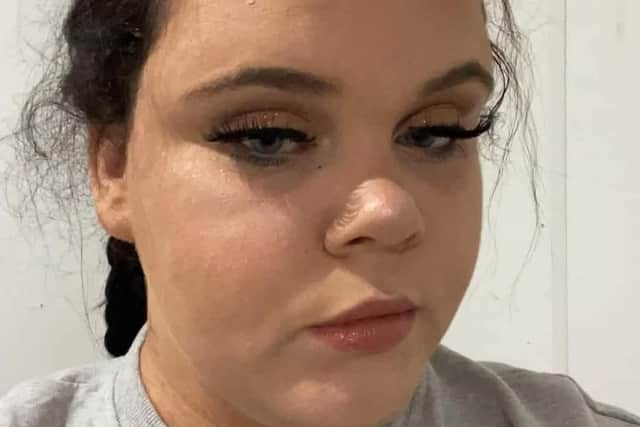

A member of staff, who was meant to check on her every 10 minutes, did not observe her for 35 minutes before she was discovered at 7.09pm on September 11.
The 11-person jury found that the healthcare worker falsified the records to make it look like they had completed the checks.
They also found that the transfer of Louise to Highbury Hospital from Bassetlaw Hospital without any warning had contributed to her death.
The inquest, which concluded on February 20, lasted nearly two weeks as evidence was heard from people involved in Louise’s care at institutions run by Nottinghamshire Healthcare NHS Trust.
And after retiring to deliberate on February 19, the jury returned a verdict of ‘unlawful killing gross negligence manslaughter’.
Louise, who was diagnosed with Emotionally Unstable Personality Disorder (EUPD), had been a patient on the B2 ward at Bassetlaw Hospital in Worksop since June 2022 before she was moved to Highbury on September 7 that year.
Her symptoms included struggling with rejection and being unable to regulate her emotions.
She also heard voices compelling her to harm herself and was assessed by psychiatrists as being at between ‘high’ and ‘very high’ risk for self-harm and suicide.
Triggers which led to a flare-up of her symptoms included unexpected events and receiving information she found difficult to deal with.
The jury found that there was no clinical rationale for her transfer between Bassetlaw and Highbury and that it was not carried out in an appropriate way, due to neither Louise nor her family being involved in the decision.
The timing of it, in the evening, was wrong, the jury said, and clinical staff who were aware of the risk a transfer posed to Louise’s mental health were not consulted.
The transfer should not have happened until after a meeting of Louise’s multi-disciplinary team (MDT), the jury found.
It was also concluded that there was no formal handover provided to Highbury, no plan after the transfer to manage Louise’s symptoms and to keep her safe, and no chance for Louise to say goodbye to the staff she had built therapeutic relationships with at Bassetlaw.
The jury found that at Highbury, the plan to observe Louise every 10 minutes, as opposed to constantly, was appropriate, and that before 6pm on September 11, Louise’s risk was managed effectively.
But they found that six observations that should have taken place between 6pm and 7pm were not carried out and that records were falsified to say that they had been.
This contributed to her death, from a lack of oxygen to the brain, which occurred after she tied a ligature around her neck at some time between 6.34pm on that night – the last time she was seen alive – and 35 minutes later when she was discovered.
She was taken to Queen’s Medical Centre but died at 12.30pm the next day.
Coroner Alexandra Pountney stopped short of issuing a Prevention of Future Deaths report, which mandates an authority to make changes to ensure that a death does not happen for the same reasons again.
She said: “I am satisfied that the steps that have been taken by the trust after Louise’s sad death means that I am not concerned there is a risk of future deaths based on the evidence that I have heard.”
Louise’s mother, Carmell Bushell, said she hoped ‘lessons will be learned and other families will be spared this pain’.
She said: “Lou-Lou was caring, kind and always thinking of other people.
"She loved helping others and touched the hearts of everyone who knew her.
“She had the cheekiest smile and the funniest laugh, and she brought so much joy into our lives.
“She had hopes and dreams for her future.
"She wanted to progress in her care, be discharged, live independently, work with animals and have her own family one day.
"She trusted the people around her to keep her safe.
“The inquest and earlier criminal proceedings have been an extremely difficult process for our family but they were important to us.
“We needed answers about what happened to Lou and to understand how she was failed when she needed protection the most.”
Nikki Fahey, head of medical negligence East Midlands at Lime Solicitors, said: “We continue to support Louise’s family as they consider the next steps following the inquest, including a civil medical negligence claim against Nottinghamshire Healthcare NHS Trust.”
When life is difficult, Samaritans are here to listen – day or night, 365 days a year. You can call them for free on 116 123 or visit samaritans.org